- AI
- agents
- startups
The Real FOMO of 2026: What the AI Industry Is Actually Afraid Of
The fear in 2026 is structural. The fundamental logic of building a company is being rewritten, and it hits everything indiscriminately.
Also on Substack
Back in early 2023, when I was building an AI startup, our team was glued to every announcement coming out of OpenAI and the major tech companies. Function Calling, the GPT Store, Copilot. Every new release forced us to stop whatever we were doing, huddle up, and stress-test our entire strategy: Does this change our direction? Do we need to pivot? Investors kept asking the same question on loop: “Is your whole category about to get swallowed?” That anxiety was constant. It just hung there.
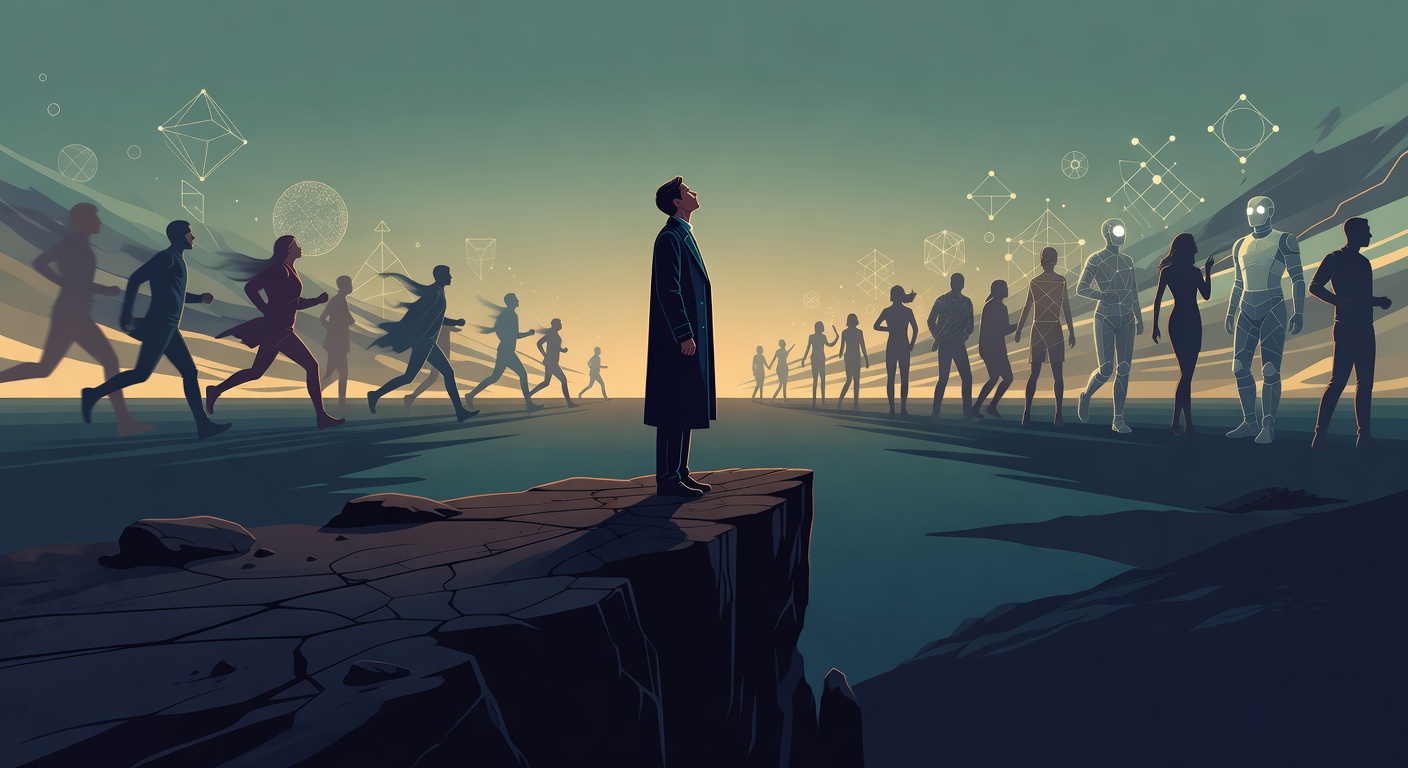
Back then, at least the fear had shape. You knew what you were afraid of. Getting steamrolled by a platform player, or falling behind the pace of technical change. By 2026, the anxiety hasn’t gone away. It’s gone deeper. Because now you don’t even know what to be afraid of.
After Claude Code took the market by storm in 2025, a lot of developers felt borderline invincible. Productivity went through the roof. The boundaries of what one person could build kept expanding. It felt like the dawn of the Super Engineer. Master AI collaboration, ride the wave, and you’d never get left behind. But then something shifted. Once people started layering persistent memory on top of Claude Code and giving it full system access, agents started working independently in a real way. Not just executing instructions, but understanding context, breaking down goals, and driving tasks forward on their own. As memory management improved, skill libraries grew, and planning and execution became more systematic, the idea of a Super Agent that outperforms any Super Engineer stopped sounding like science fiction. Engineers had hoped to become augmented humans in the AI era. Instead, they’re watching agents evolve too, and evolve faster than they can.
The shockwave doesn’t stop at engineering. Think about what “startup capability” has traditionally meant: fundraising, hiring and managing teams, go-to-market execution. All of it is fundamentally about organizing people. Every playbook assumes humans are the core variable. But if AI can handle GTM, software development, and design, then the entire framework we’ve built around human-centric startups starts to crack at the foundation. Picture a team of Super Agents running 24/7. No ego management, no ramp-up time, instant scalability. Compared to a human team, that’s not even a fair fight. So here’s the uncomfortable question: does more than half of today’s AI application-layer startups even need to exist?
This hits especially hard for people leaving big tech to start companies. Their edge used to be superior organizational efficiency, aggressive execution, and scalable SOPs. A playbook that used to be nearly unbeatable. But in the agent era, can you really out-efficient something that works around the clock and never burns out? Legacy industry players at least have years of proprietary data and deeply embedded operational know-how to fall back on. The very thing internet-era founders pride themselves on, organizational efficiency, is exactly the part that’s easiest for agents to replace.
So the FOMO of 2026 is a different animal. It’s not about your niche getting eaten. It’s not about competing with Big Tech. It’s structural. The fundamental logic of building a company is being rewritten. How businesses operate, how teams are organized, how people collaborate. And this shift doesn’t target any single industry. It hits everything, indiscriminately. VC will change. Startups will change. Mature companies will get disrupted, “innovative” ones included. Consulting, finance, manufacturing. None of it is safe.
The transformation is coming faster, and sooner, than any of us expected.
02 · More writing